Kubernetes Changed Block Tracking API now in alpha
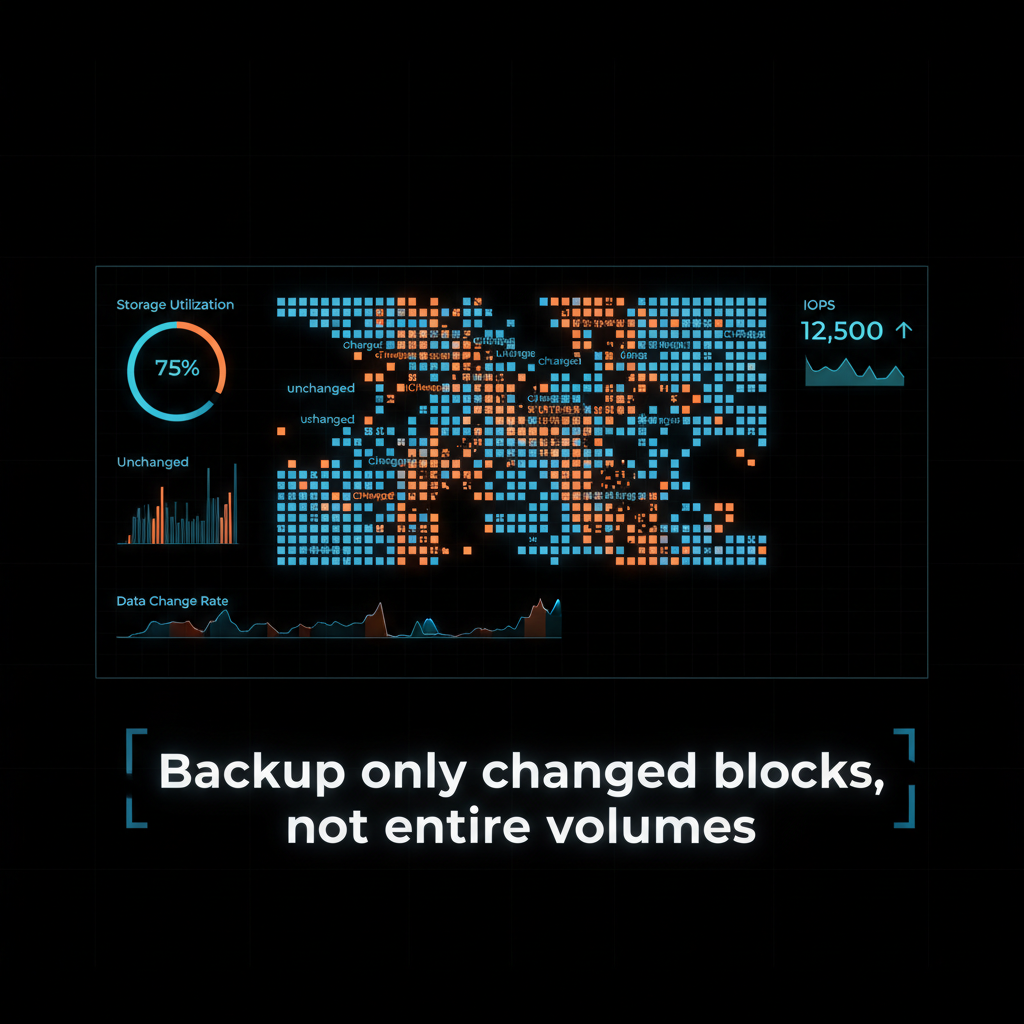
Kubernetes storage just got smarter. The Changed Block Tracking API is here in alpha, and it's about to change how you backup large datasets.
Here's what changed: Instead of scanning entire volumes during backup operations, your CSI driver can now identify exactly which blocks have changed between snapshots. Only backup what matters.
Why this matters:
Traditional full backups are expensive. They eat bandwidth, consume I/O resources, and create storage bloat when 90% of your data hasn't changed since the last backup. Long backup windows, high resource utilization, redundant data sitting around—it adds up.
The Changed Block Tracking API solves this by giving Kubernetes native support for incremental backups through the CSI interface. Your backup applications can now focus only on blocks that actually changed, not the entire volume.
How it works:
The implementation includes three components: a CSI SnapshotMetadata Service API (via gRPC), a Kubernetes CRD that advertises metadata service availability, and an external sidecar that connects CSI drivers to backup applications.
Storage providers need to implement GetMetadataAllocated and GetMetadataDelta RPCs. Backup solutions need to handle streaming client-side code and process large dataset streams efficiently.
Important note: Currently only block volumes are supported. File-based storage systems can't use this yet.
This is alpha, which means it's still being refined. The Kubernetes team plans to push it to Beta depending on adoption and feedback.
If you're managing stateful workloads with critical data, this is worth your attention. Faster backups, lower costs, less wasted storage. Head to the official Kubernetes CSI documentation to get started.