Why DevOps Isn’t Just Automation
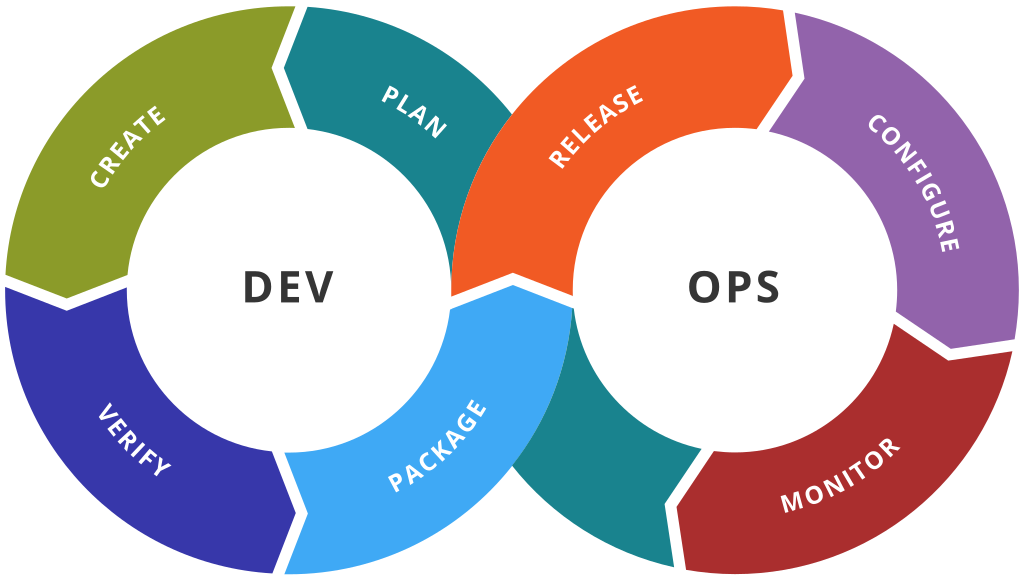
In many discussions about DevOps, the focus is often on tools, pipelines, and automation scripts. While automation is undeniably important, equating DevOps solely with automation misses the point. A more accurate definition is that DevOps is a set of cultural philosophies, practices, and tools that enable an organization to deliver applications and services faster than traditional approaches.
Let’s break this down and explore why culture and practice matter just as much (if not more) than automation, how automation plays its role, and how you can leverage all three-culture, practice, tools-to help an organization move faster, more reliably and with greater agility.
The limitations of the “traditional” model
In many legacy or traditional organizations you’ll often find a structure like this: development writes the code → operations deploys and runs it → support handles issues. These silos lead to slow hand-offs, unclear ownership, long feedback loops, and risk-averse operations. Developers push changes, operators resist unless everything is perfect, and the blame game is all too common. This leads to slower time to market, less innovation, more risk and less resilience.
The promise of DevOps is to break down these silos: developers and operations (and increasingly QA, security, product) working together in cross-functional teams that own services end-to-end, shortening feedback loops, increasing visibility, and enabling faster, more reliable change.
Culture & philosophy: the foundation
Here are some of the critical cultural and philosophical principles behind true DevOps:
• Shared responsibility & end-to-end ownership - Teams that build a service are also responsible for running it in production, monitoring it, iterating on it. When dev and ops share the goal of “delivering value & keeping it running” rather than throwing over a wall, performance improves.
• Collaboration, trust & psychological safety - If teams fear failure, hide problems, play blame games, experimentation stalls. A culture of safe failure, blameless post‐mortems, open visibility fosters innovation.
• Continuous learning & improvement - DevOps is not a “set it and forget it” undertaking. It’s a continuous journey: measure, get feedback, learn, adjust practices, evolve architecture. Without this mindset, you plateau.
• Lean thinking and flow-focused mindset - Borrowing from lean manufacturing: small batch sizes, reducing waste (manual hand-offs, approvals, delays), shortening feedback loops, focusing on delivering value to users rather than internal process perfection.
Automation & tools: vital enablers, but not the whole story
Automation is a key pillar of DevOps: but let’s be clear - automation alone ≠ DevOps. Here is how automation fits and where it falls short:
Why automation matters:
- Automating repetitive, error-prone manual tasks (infrastructure provisioning, deployments, release processes, tests) drives consistency, reliability and speed.
- It enables quicker feedback: e.g., automated tests on commits, continuous integration, deployment to staging/production, rapid rollback if needed.
- Infrastructure as Code (IaC) ensures infrastructure is versionable, repeatable, reproducible, and aligned with the application codebase.
Automation alone is insufficient. As one article put it: “Automation is the amplifier of ownership in DevOps culture. Ownership without automation is overwhelming; automation without ownership is hollow.” Simply building a fancy pipeline, deploying many times per day, but still operating in silos, finger‐pointing when things go wrong, long feedback loops from production - you’ve automated a flawed process.
Practices & organisation: the middle ground
To realise DevOps in full, culture + automation need to be tied together via practices and organisational structures:
• Cross-functional autonomous teams - Instead of dev/ops/test being separate, you form teams that include dev, ops, QA (and sometimes security) which own the service from design to production. This reduces hand-offs, friction, delays.
• Small batch, frequent deployments - Rather than big bang releases every few months, you aim for small incremental changes, frequent releases, fast feedback. This reduces risk and improves agility.
• Continuous integration & continuous delivery (CI/CD) - Automate builds, tests, deployments; ensure your codebase is always in a deployable condition, and your teams can push changes quickly.
• Monitoring, feedback & observability - Once code is live, you must monitor its performance, feedback user data and incidents back into the team. Without this, you don’t learn and you don’t improve.
• Blameless post-mortems / incident learning - When failures happen (and they will), teams must look at what happened, why, how to improve. Avoid blame, encourage transparent learning.
• Value stream mapping & waste elimination - Map your flow from idea → code → build → test → deploy → production feedback, identify hand‐offs, bottlenecks, approvals, manual steps. Then streamline or remove them.
Putting it all together: faster, better delivery
When culture, practice and tools come together, the benefits become real:
- Faster time to market - Because manual hand-offs and delays are minimised, small batches, automation, teams own delivery.
- Higher deployment frequency - More frequent changes means faster feedback from end-users, smaller risks, faster learning loops.
- Improved reliability and quality - With automated testing, observability, feedback loops, you catch issues earlier, reduce risk of big failures.
- Closer alignment with business value - When teams own services end-to-end and engage with users/feedback, they can respond quicker to business/market change.
- Empowered teams, less overhead - Teams don’t wait for other departments, they act, decide and iterate. The organisation becomes more agile.
- Continuous improvement culture - With measurement, retrospectives, feedback loops, teams evolve their process, architecture, tooling, and improve over time.
Why many “DevOps” initiatives stall
Because organisations often treat DevOps as “install a CI/CD toolchain and call it done”. Without changing culture and practice, the gains are limited. Some common failure modes:
- Culture remains siloed - dev/ops/test still separate, still blame each other, still have different KPIs. Automation just speeds up a broken flow.
- Automation without ownership - You automate builds, tests, deployments but no one owns running the service, monitoring it, fixing production incidents or learning from them.
- No measurement or feedback loops - You deploy often, but you don’t measure lead time, deployment frequency, failure rates, mean-time-to-restore. Without metrics you don’t know if you’re improving.
- Big-bang transformation - Trying to flip the whole org in one go instead of evolving incrementally. High risk, often fails.
- Leadership & incentives misaligned - Unless leadership supports cross-team collaboration, shared goals, shifting incentives, the old silos persist.
- Tool-first, not culture-first - Buying CI/CD or release-automation tools without addressing culture and team structure. Tools alone don’t fix broken processes.